
Planning
How to plan your farrier rounds to drive less
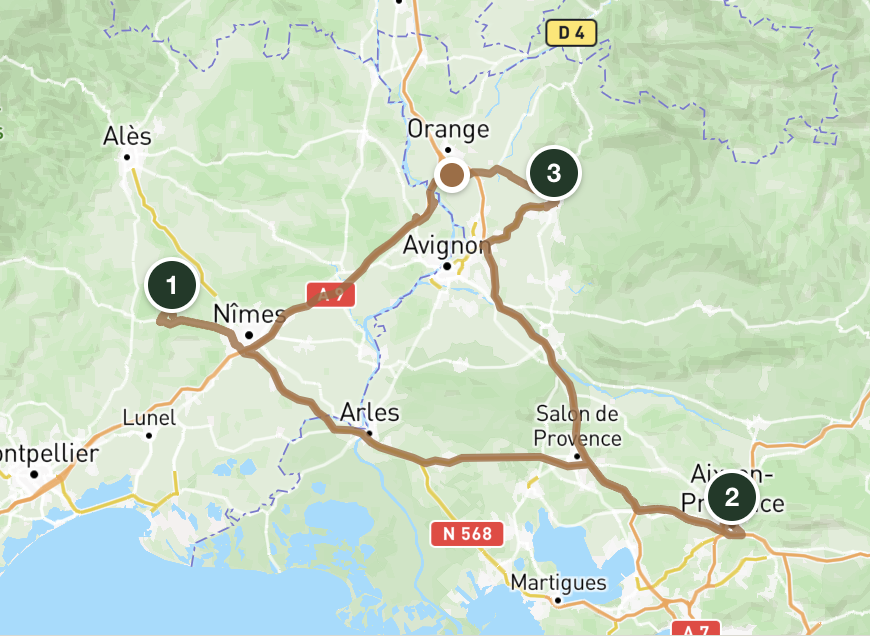
In short
Group nearby stables on the same day, let the order of stops be optimised, and tell your clients when you'll arrive. Over a month, the kilometres and — above all — the time you save more than cover the subscription, especially in the weeks where several detours hide in your plan.
You’re a farrier. You know your area better than anyone — your stables, your roads, your habits. On your core round, you don’t drive at random.
That’s not where the problem is. It’s in what moves. The new client just off your usual loop. The week three appointments shift. The area too wide to hold in your head. That’s where the extra kilometres creep in — fuel burned for nothing, and hours in the van you don’t invoice.
The good news: this is exactly the kind of loss that a little method fixes.
Why your rounds cost more than you think
The cost of a badly planned round is invisible. You won’t see it on an invoice. It hides in the fuel tank, in your time, and — if your area runs along the motorway — in the toll receipts.
Take a week where several appointments shift. A few avoidable detours quickly add up to dozens of extra kilometres. By month’s end, that weighs as much as a full tank of fuel — sometimes more.
And time matters as much as money. An extra hour on the road is an hour less with the horses. Or an hour less at home.
Group your visits by area, not blind
Even when you know your area by heart, one reflex is costly: slotting each appointment on whichever day is handiest at the time, without looking at the rest of the week. A client rings about an area you already cover on Thursday — but you’ve booked them on Tuesday.
The result: you pass through the same area twice in one week.
The method that saves time is simple: put neighbouring stables on the same day. Not horse by horse — you already do that. The real saving comes from the level above: nearby stables, seen on the same day.
That’s what Hoofbook does automatically. You drop in your visits, and the tool groups the ones that are in the same corner.
Optimise the order of your stops
Once a day’s visits are grouped, one question remains: in what order should you do them?
By hand, we often go on gut feel. That’s rarely the best route. Across five or six stops, the number of possible routes is huge, and the eye can’t see them all.
Let the tool do the maths. Two modes to choose from: the fastest route, or the cheapest (avoiding costly motorway sections where your route crosses them). You choose, depending on the day.
Keep a view of the whole week
Planning day by day is planning blind. You don’t notice that Tuesday and Thursday both send you to the same area.
An overview changes everything. When you see the whole week at a glance, the duplicates jump out. You move one visit, and suddenly two days become one clean round.
That’s less road, without seeing a single horse fewer.
How to avoid wasted trips
There’s worse than a detour: the trip for nothing. You drive out, and the horse isn’t caught. Or the owner forgot and isn’t there.
No tool will catch the horse for you. But two things genuinely help. First, Hoofbook works out a realistic arrival time for each stop — taking into account the time spent at each stable. You can pass it to your clients: “I’ll be there around half nine.” A forewarned owner means a horse that’s ready.
Second, each stable’s contact details stay at hand. Not sure before you leave? One call, and you save yourself 40 kilometres for an empty stall.
How much can you really save?
Let’s keep the maths simple, and honest. A week rarely hides just one detour. Say you avoid two of 30 km.
- Fuel: roughly €5 to €8 per avoided trip.
- Time: 30 to 45 minutes back, each time.
- Tolls: €5 to €15 on top, if your area runs along the motorway.
Fuel alone doesn’t pay for everything. It’s the time that tips the balance: an hour back each week is a billable hour, or an hour at home. Add the busy weeks, the tolls when there are any, and Hoofbook — €20 a month, excluding VAT — is soon covered.
And the wider your area, the more the maths tips in your favour.
What if an appointment changes mid-week?
It happens all the time. A stable cancels, a horse is injured, a client reschedules.
The trap is replanning everything by hand and breaking the balance of the week. With an overview, you drag the visit from one day to another, and the round reorganises around it. Two gestures, and your week is optimised again.
You set off with a clear head — no detour, and without spending your Sunday evening rebuilding the plan.
Fewer kilometres. Lower costs. More time for what really matters. That’s the whole point of a well-planned round — and it’s exactly what Hoofbook is built for.
Key takeaways
- Plan by geographic area; don't lock in an appointment without seeing the rest of the week.
- Let a tool work out the best order between your stops.
- Tell each client when you'll arrive: fewer wasted trips.
- It's mainly the time saved — more than fuel alone — that pays for the subscription.
Frequently asked questions
- How long does it take to plan a week of rounds?
- Once your stables and horses are saved, planning a week takes a few minutes. You drop in your appointments, the tool groups nearby visits and suggests an order. You adjust if needed.
- Is it worth it for a solo farrier?
- Yes, and that's where the saving is most direct: every extra kilometre comes out of your own pocket, and every hour saved is yours. Over a month, the time and kilometres you save comfortably cover the price of the subscription — all the more once your area widens.
- How do I avoid wasted trips when a horse isn't caught?
- No tool catches the horse for you. But Hoofbook works out a realistic arrival time for each stop, which you can pass to the owner so they're ready. And each stable's contact details stay at hand for a quick check call before you set off.
- Do I need a map of all my stables to start?
- No. You add your stables as you go. Hoofbook uses their address to work out each round's route — there's no need to prepare everything in advance.
- What happens if an appointment changes mid-week?
- You move the visit from one day to another by dragging it, and the round reorganises around it. There's no need to replan everything by hand.